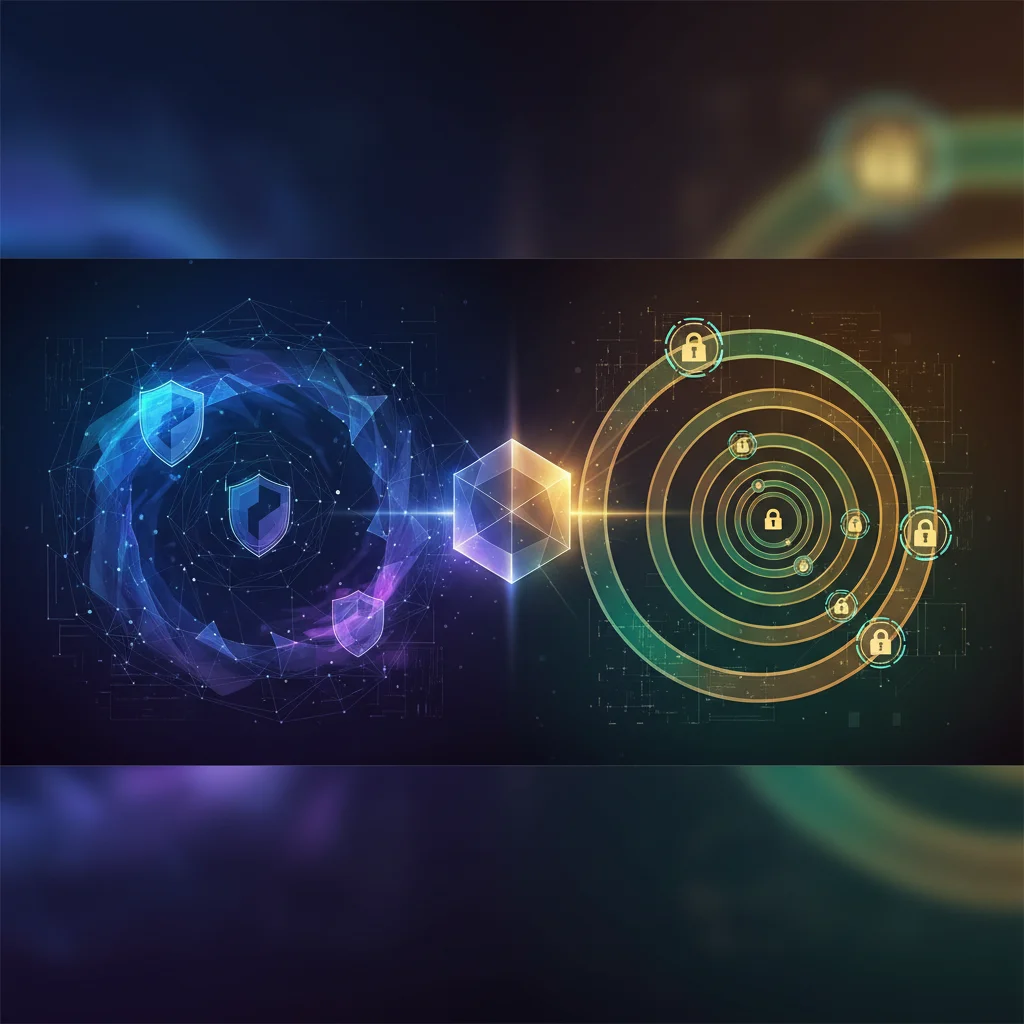
The landscape of blockchain technology is rapidly evolving, with new solutions emerging to address the complex demands of privacy and data integrity. Two noteworthy projects in this domain are Midnight and zkPass. Although they both focus on privacy, they serve fundamentally different purposes and use cases. This article will explore the architectural differences, trust models, use-case fits, and the overall impact of these two technologies.
Overview of zkPass
zkPass is a privacy-preserving attestation layer built on the Ethereum ecosystem. Its primary function is to prove facts about off-chain data while maintaining user privacy. It achieves this by leveraging zkTLS/3P-TLS and hybrid zero-knowledge (ZK) technologies. Here’s how it works:
- Private data is extracted from HTTPS websites.
- Proofs are generated locally on the user's device or browser.
- Applications can verify these proofs either locally or on-chain within the Ethereum Virtual Machine (EVM).
zkPass is particularly effective when the challenge is to "prove something about Web2 data without revealing it," such as identity verification or compliance attributes.
Overview of Midnight
Midnight, on the other hand, is a privacy-first blockchain designed to offer a more comprehensive solution for confidential application execution. It allows users to compute on private data locally and submit zk proofs instead of raw inputs. Key features of Midnight include:
- Support for shielded transactions and selective disclosure.
- Smart contracts that utilize a combination of public-ledger logic, ZK circuits, and local off-chain components.
Midnight is particularly strong for applications that require full confidentiality, such as private governance, confidential finance, and healthcare workflows.
Architectural Differences
The architectural distinction between zkPass and Midnight lies in their approaches to privacy. zkPass acts as an integration layer within the existing Ethereum ecosystem, meaning that while it provides a method for private data attestation, the execution environment remains Ethereum. Consequently, smart contract code and state are stored on-chain, and every node maintains the entire chain state.
In contrast, Midnight changes the execution environment itself, making privacy native to the application's state transitions. This fundamental difference allows Midnight to facilitate more complex privacy features beyond just data ingress.
Trust Models
Trust models vary significantly between zkPass and Midnight. The flow of zkPass relies on external HTTPS data sources and various actors within the zkPass protocol, including nodes, allocators, and validators. This creates a more decentralized trust model that depends on multiple components.
Conversely, Midnight establishes a core trust boundary based on the blockchain itself. Validators on the Midnight chain are responsible for verifying zk proofs and participating in consensus through a modified AURA/GRANDPA model, which aligns it more closely with the Cardano ecosystem.
Use-Case Fit
The use-case applicability of zkPass and Midnight is also different. zkPass excels in scenarios where the primary need is to validate private Web2 data without exposure. This includes:
- Identity verification
- Account balances
- Compliance attributes
On the other hand, Midnight is geared towards applications that require comprehensive privacy throughout their runtime, such as:
- Confidential finance applications
- Selective-disclosure identity management
- Private governance and voting systems
- Healthcare workflows
- Shielded transfers
Developer Experience
For developers, zkPass serves as an integration layer that can be added to an existing application stack, making it relatively straightforward to implement. In contrast, Midnight represents a fundamental platform choice. It utilizes Compact and TypeScript for development and operates under its own NIGHT/DUST model. Notably, developers cannot directly reuse Solidity code in Midnight, which means that building applications will require adapting to a different stack.
Current Status and Future Prospects
As of March 17, 2026, zkPass appears to be further along in its production readiness. It boasts over 1 million unique attested users, 200 million verifiable computations, and more than 80 integrations. In contrast, Midnight is still in the rollout phase, targeting mainnet launch for late March 2026, with federated node operators being activated during the Kūkolu phase.
Practical Edge Cases
An important practical consideration is that Midnight’s documentation indicates that oracle-dependent decentralized applications (dApps) could not yet be built on its testnet. This limitation contrasts sharply with zkPass, whose entire value proposition revolves around proving external data. Therefore, if an immediate need is to incorporate private Web2 data attestation within an Ethereum application, zkPass is the more practical choice. For those requiring a full confidential application runtime, Midnight offers a more ambitious framework.
Conclusion
The bottom line is that zkPass and Midnight are not substitutes for each other; rather, they complement each other in the blockchain privacy landscape. zkPass serves as a narrow yet immediately useful tool for importing truthful private data into Ethereum, while Midnight provides a broader privacy chain for confidential execution, state management, and selective disclosure. The strongest architecture emerges when zkPass is used for private truth ingress and Midnight for private application logic and settlement.
Meta Description: Explore the differences between Midnight and zkPass, two innovative privacy solutions in blockchain, and their unique use cases in the evolving fintech landscape.


Comments
No comments yet.
Log in to post a comment.